
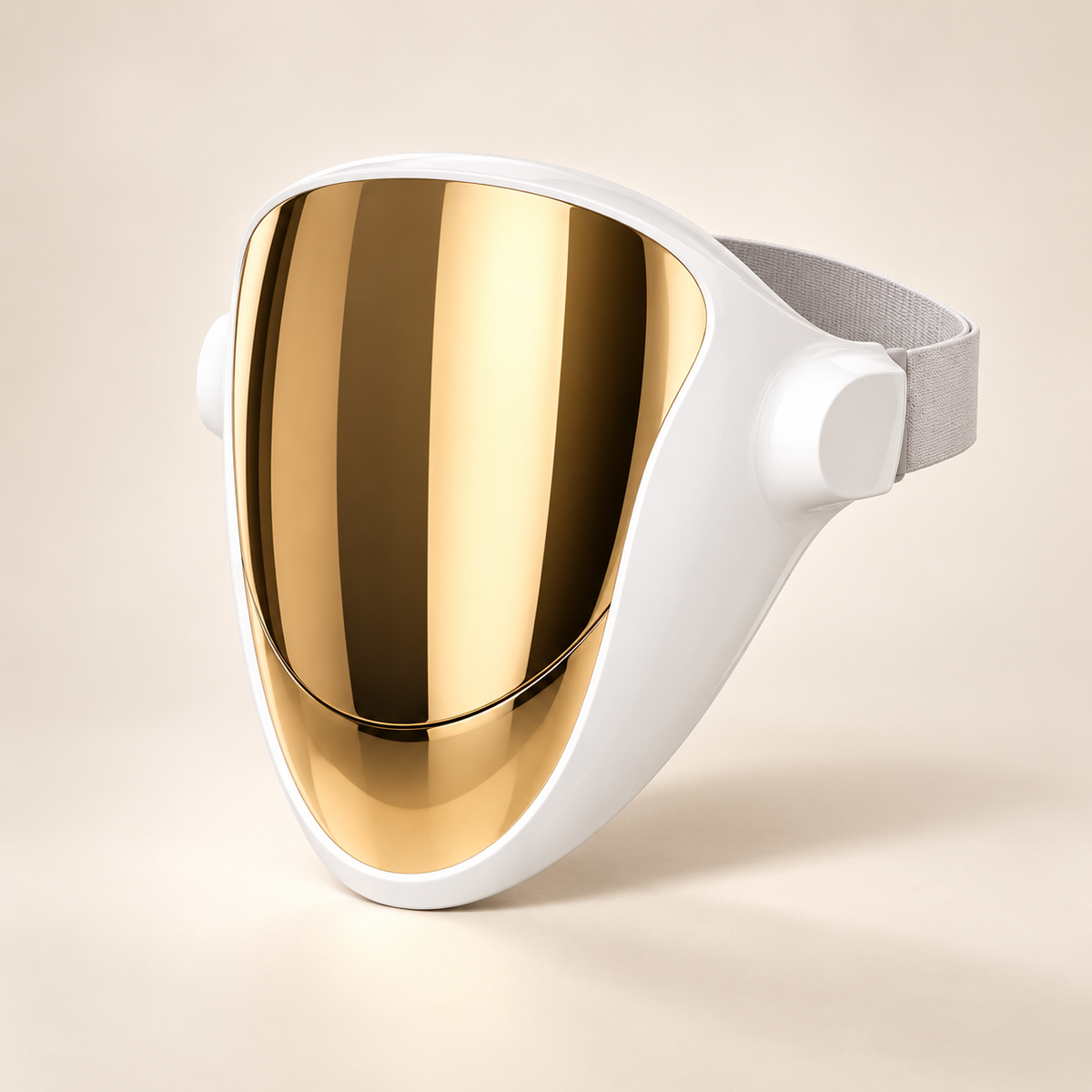
Should you use red light therapy before or after skincare? It is a practical question, especially when your usual routine already includes cleanser, serum, moisturiser and sunscreen. Adding a light therapy mask should not mean guessing which products belong underneath it, extending every session or replacing the basics that already work for your skin.
The most useful starting point is your device manual. If the manufacturer instructs you to use the device on clean, dry skin, place that session after cleansing and drying, then continue with suitable skincare afterwards. If the instructions specify a compatible product or a different preparation method, follow that guidance instead. There is no universal layering rule that overrides the instructions for your particular device.
This guide explains how to think through the order of a red light therapy skincare routine, what to check before combining products, and how to keep home sessions straightforward. It is general educational information, not individual medical advice or a treatment plan for a skin condition.
The short answer: let your device instructions set the order
For a device whose instructions require clean, dry skin, a simple sequence is: cleanse, dry your skin, complete the session as directed, then apply appropriate skincare. In a morning routine, that means returning to your usual daytime skincare and sunscreen afterwards. In an evening routine, it means returning to your usual night-time products, provided they are suitable for your skin and compatible with the device guidance.
That sequence is a starting framework, not permission to combine every ingredient with every device. Before your first session, check the sections covering skin preparation, eye protection, session duration, frequency, cleaning and circumstances in which you should not use the product. If a detail is unclear, ask for clarification rather than filling the gap with a social media routine.
New to the subject? Start with our introduction to what red light therapy is and how it is discussed, then return here to plan where a device could fit into your existing habits.
Why skincare order deserves some thought
Different skincare products have different jobs. A cleanser removes the day's build-up, a moisturiser supports your everyday skin-care needs, and sunscreen belongs in a daytime sun-protection routine. A light device adds another set of instructions rather than taking over all those roles. Thinking about the order helps you avoid treating several unrelated steps as though they were interchangeable.
It also helps separate product marketing from practical use. A serum described as a glow booster is not automatically intended to sit underneath an LED mask. A cream that feels comfortable at night is not automatically approved for contact with a particular device. The relevant questions are what the manufacturer allows, what the skincare label says, and how your own skin tolerates the routine.
A useful rule is to make each step explainable. Know why a product is there, when it should be applied and whether you have checked its compatibility. If you cannot answer those questions, simplifying the routine is usually more sensible than buying another layer to solve the uncertainty.
Step one: read the manual before changing your routine
Before introducing red light therapy at home, put the device instructions beside your current skincare products. Look for the exact preparation requirements. Does the manual say clean and dry? Does it name products to avoid? Does it explain whether the device can contact the skin? Does it require specific eye protection? These details matter more than an attractive routine diagram made for a different product.
Check the complete schedule too. Session length, frequency, placement and operating mode should come from the instructions for that model. Do not borrow timings from a larger panel, a salon treatment or someone else's mask. Two products can both be described as red light therapy devices while having different operating requirements.
If you take medication, have a diagnosed skin or eye condition, or have been told that you are sensitive to light, ask an appropriate healthcare professional whether using the device is suitable for you. A general blog cannot assess your individual circumstances, and a cosmetic routine should not become a substitute for that conversation.
Step two: cleanse according to your normal needs
If your manual calls for clean skin, plan the session around a cleansing step you already do. You do not need to turn preparation into an elaborate ritual simply because a new device is involved. Choose a cleanser that suits your skin and use it according to its label. Remove makeup and other products as required by the device instructions before proceeding.
Be cautious about adding a new exfoliating cleanser on the same day as several other new products. Changing many things together makes it harder to understand what your skin likes and what it does not. Keeping your familiar cleanser in place can make the new routine easier to evaluate, without implying that every familiar product is automatically compatible with the device.
After cleansing, follow the manual's drying requirements. If it says dry skin, allow that step to be complete before putting on the mask or positioning yourself in front of a panel. Do not assume that a damp face, facial mist or fresh layer of toner is equivalent to the preparation described in the instructions.
Step three: complete the session without improvising
Once your skin is prepared, use the device exactly as directed. Check the fit or position, choose only an appropriate setting and follow the recommended session duration. Use the eye protection specified by the manufacturer. Closing your eyes is not a reason to disregard a requirement for protective equipment.
A session should not become a competition to see how much light you can tolerate. Do not extend it to compensate for a missed day, move closer to a panel than instructed, or stack multiple devices because their names sound similar. More time and more equipment are not reliable shortcuts to a better routine.
If something feels wrong, stop rather than pushing through to finish a timer. Persistent discomfort, unexpected skin changes or eye symptoms deserve appropriate professional advice. For more questions to consider before home use, read our red light therapy safety guide, while keeping your own device manual as the primary source for operating instructions.
Step four: return to suitable skincare afterwards
After a session, continue with products that are suitable for your skin and consistent with any aftercare instructions. You do not need a complicated finishing routine simply to make the session feel complete. A manageable approach is easier to repeat than a long sequence of products bought specifically to accompany a device.
Apply skincare according to its own directions. Avoid assuming that treatment with light means every product will now work better, penetrate further or become appropriate for sensitive skin. Those are separate claims that need evidence for the specific combination. A device session is not a general endorsement of everything applied afterwards.
If your skin is uncomfortable, do not use the rest of the routine to experiment with stronger products. Pause, reassess and seek advice if needed. The aim is a routine you can follow comfortably and responsibly, not a checklist you must complete regardless of how your skin feels.
Can you use serums before red light therapy?
The answer depends on the serum and the device instructions. If the manual says to use clean, dry skin without products, keep serums for afterwards unless the manufacturer provides clear alternative guidance. A serum being lightweight, clear or popular does not establish that it belongs underneath your mask.
Read the actual ingredient and usage information rather than relying on the front-label name alone. Two products marketed under the same broad category can have different formulations and directions. If a brand sells a product specifically for use with a light device, confirm that the compatibility claim applies to your model, not just to light therapy in general.
There is also no requirement to purchase a special serum before you can understand the device's routine. Start by establishing what the instructions require. If they do not call for an additional product, avoid treating an optional purchase as an essential part of using the device correctly.
What about retinol, exfoliating acids and prescription products?
These combinations deserve individual checking rather than a universal yes or no. Retinoids, exfoliating products and prescription skin treatments can have specific usage warnings. Your device can also have its own restrictions. Read both sets of instructions and ask a pharmacist, prescriber or qualified clinician when the combination is unclear.
Do not stop a prescribed treatment or change its schedule because a blog suggests a more convenient skincare order. The person managing that treatment is better placed to advise on your circumstances. Likewise, do not assume that putting an ingredient on after a session removes every potential concern about combining it with device use.
When planning a new routine, keep a record of what you changed and when. This is useful context if you later need professional advice. It is much more informative than trying to remember whether a new mask, cleanser, exfoliant and serum were all introduced during the same week.
Should moisturiser go on before or after an LED mask?
If the device requires bare, clean, dry skin, moisturiser belongs after the session rather than underneath it. If the manual specifies something else, follow that instruction. Do not assume a thick layer, facial oil or overnight mask is interchangeable with a manufacturer-approved preparation product.
For wearable devices, also check the cleaning instructions. Products left on contact surfaces may need to be removed using a particular method. That does not mean every device can be wiped with the same cleaning solution. Follow the instructions for the materials and electrical components of your own model, and allow it to be ready for the next use.
Choose your moisturiser for your actual skin needs rather than because it has been placed in a red light therapy shopping bundle. An uncomplicated routine can still be thoughtful. The important points are suitability, compatibility and a sequence you understand.
Where does sunscreen fit in a morning routine?
Do not use red light therapy as a reason to skip sunscreen or replace your usual sun-protection habits. Check your sunscreen label and follow its application and reapplication directions. A home light device and an SPF product have different purposes, and one is not a substitute for the other.
If your device instructions require a clean face without products, it can be more practical to schedule the session before applying your daytime skincare and sunscreen. Otherwise, you may create an unnecessary cycle of applying products, removing them for a session and starting again. Planning the order around your morning can keep things simpler.
If you prefer an evening session, keep your daytime sun-protection routine separate and consistent. There is no need to move everything into the morning simply because you have seen someone else use a mask with breakfast. Choose a time that works within the approved device schedule and your own responsibilities.
Morning or evening: choose a realistic place in your day
The best practical time is one you can manage while following the device instructions. A morning session might fit between cleansing and getting ready. An evening session might fit after removing makeup and before your final skincare. Neither choice should require you to rush, ignore eye-protection guidance or exceed the recommended frequency.
Think about your space as well as your schedule. A wearable mask, a freestanding panel and an arch-style device can involve different setup arrangements. Choose a safe, appropriate place to use and store your device as instructed. Convenience matters, but it should not come at the expense of correct placement or electrical safety.
If you are still comparing formats, our red light therapy mask versus panel guide provides a starting point. Use it to think about routine fit, then review the specifications and instructions of any product you are considering.
Keep expectations separate from skincare order
Putting your routine in the right order does not guarantee a particular result. Individual experiences can differ, and findings about one device or treatment protocol should not automatically be applied to another. Be wary of promises that a single layering trick will transform your skin or make a home device equivalent to a professional treatment.
If you decide to track your experience, use similar lighting, camera position and skincare conditions when taking photographs. Avoid judging progress from a filtered image or comparing a freshly moisturised face with a photograph taken under harsh light. A simple written record can help you notice changes without turning every session into a daily verdict.
For a more measured discussion of expectations, read how long red light therapy may take to work. Keep any product-specific claims tied to evidence for that product rather than assuming that every red light device has the same outcomes.
Choosing a Kroma device for your routine
If your main interest is a face-focused format, you can explore the Kroma Glow Mask red and near-infrared light therapy face mask. Review the current product information and ask any preparation or compatibility questions before deciding whether it suits your routine.
If you are considering a panel instead, take a look at the Kroma Glow Pro red and near-infrared light therapy panel. Do not transfer a mask routine directly to a panel: verify the positioning, session instructions and protection requirements for the exact device you choose.
You do not need to use several formats simply to build a credible skincare routine. Start with your intended use, available space and willingness to follow the instructions consistently. A product that fits your life is a more sensible consideration than one chosen solely because its routine looks impressive online.
Frequently asked questions
Do I need to wash my face before red light therapy?
Check your device manual. If it calls for clean skin, prepare your face accordingly and follow any instructions about makeup, other products and drying. Do not replace those details with a generic routine designed for another device.
Can I wear makeup during a session?
Do not assume so. Where instructions require clean skin without products, remove makeup before use. If you cannot find clear preparation guidance, ask the manufacturer before using the device over cosmetics.
Should I use red light therapy before or after moisturiser?
For a device requiring clean, dry, product-free skin, use it before moisturiser and continue with suitable skincare afterwards. A different manufacturer-approved sequence takes priority over this general framework.
Do I need a special red light therapy serum?
Not simply because you own a light device. Check whether the manufacturer actually requires a particular preparation product. Do not confuse an optional skincare recommendation with an essential operating requirement.
Can I use my mask more often to make up for missed sessions?
Follow the approved schedule rather than doubling sessions or extending the timer. If you miss a day, consult the device guidance about resuming. Avoid treating extra exposure as a guaranteed way to catch up.
Can red light therapy replace my skincare or prescribed treatment?
Do not treat a home device as a replacement for prescribed care, sunscreen or necessary professional advice. Discuss treatment changes with the clinician responsible for your care rather than making them on the basis of a general article.
The takeaway: simple, compatible and instructions-led
The question is not just whether red light therapy goes before or after skincare. It is whether your chosen sequence matches your device instructions, respects your skincare labels and fits comfortably into your day. Where clean, dry skin is required, cleansing comes first, the session follows, and suitable skincare comes afterwards.
Keep the routine understandable, check uncertain combinations and resist adding steps simply because they are popular. Explore the Kroma Glow Mask if you are considering a face-focused device, and make your next step an informed one rather than a more complicated one.



Leave a comment
This site is protected by hCaptcha and the hCaptcha Privacy Policy and Terms of Service apply.