
Choosing a red light therapy device can feel surprisingly complicated. One product is a compact panel, another is a face mask, and another looks more like a flexible mat. Product descriptions often focus on technical language, but the most useful starting point is much simpler: where will you use it, what area do you want to focus on, and which format will fit naturally into your day?
This guide compares red light therapy panels, face masks and mats from a practical buying perspective. Rather than promising a particular result or declaring one format universally best, it helps you narrow the choice around your space, preferences and intended routine. We will also introduce our featured product, the Kroma Glow Pro, and explain where it fits within the wider Kroma range.
If you are shopping for red light therapy at home in the UK, think of this as your checklist before buying. A device should be understandable, manageable and appropriate for its intended use. A large specification sheet is not a substitute for clear instructions, and the most impressive-looking option is not necessarily the one you will enjoy using.
Start with your routine, not the product photograph
Before comparing devices, picture an ordinary day rather than an ideal one. Do you have a quiet corner where a panel could stay set up? Would you prefer a face-focused session as part of your skincare routine? Are you more comfortable using a flexible device in a suitable resting area? These questions help turn a broad category into a realistic shortlist.
Your first purchase does not need to cover every possible use. In fact, choosing one clear priority often makes the decision easier. If your main interest is a facial routine, start by comparing face-focused formats. If you prefer flexibility in positioning, look at panels. If a flexible format is your priority, investigate a mat and check its specific placement instructions.
Also consider how much preparation you are willing to do. A device that needs to be unpacked, positioned and stored after every session may suit some households perfectly. For others, a compact product with a dedicated place is more practical. Convenience does not establish effectiveness, but it can make a considerable difference to whether a purchase becomes part of your routine.
What should you know about red and near-infrared light?
You will see the terms red light and near-infrared light throughout this category. They describe different parts of the light spectrum, and some devices combine them. Understanding that distinction is helpful, but it is only one part of evaluating a product. Wavelength information alone does not tell you what outcome you should expect from a particular consumer device.
Likewise, two products that mention the same wavelengths are not automatically interchangeable. Their design, output, intended positioning and instructions may differ. Avoid carrying a routine from one device across to another simply because both are described as red light therapy. The supplied manual should be your starting point for operating the actual product you buy.
It is sensible to be cautious about dramatic claims. A shopping guide cannot establish that a device will treat a medical condition, and a product description is not individual medical advice. If you are buying because of a symptom or diagnosed condition, discuss that with an appropriate healthcare professional rather than relying on a general wellness article to choose treatment.
Red light therapy panels: a positionable format
A panel is worth considering if you like the idea of positioning a light source rather than wearing a device. Panels vary considerably in size and stand design, so look beyond the word panel itself. A compact desktop format and a larger standing format can require very different amounts of space, even when they sit within the same product category.
Think about where the panel would stand, how its power cable would be routed and whether you could position yourself comfortably according to the instructions. The setup should not involve balancing the device on an unsuitable surface or improvising a mounting arrangement. Practical details such as a base, adjustment mechanism and cable clearance can matter as much as the headline features.
A panel may appeal if you want a flexible setup within the areas and positions permitted by its manual. That flexibility should not be mistaken for unlimited use. Check the intended use, operating distance, eye-protection guidance and session limits before deciding that a particular device suits you. Do not assume that moving closer or extending a session makes it better.
Hero product: meet the Kroma Glow Pro
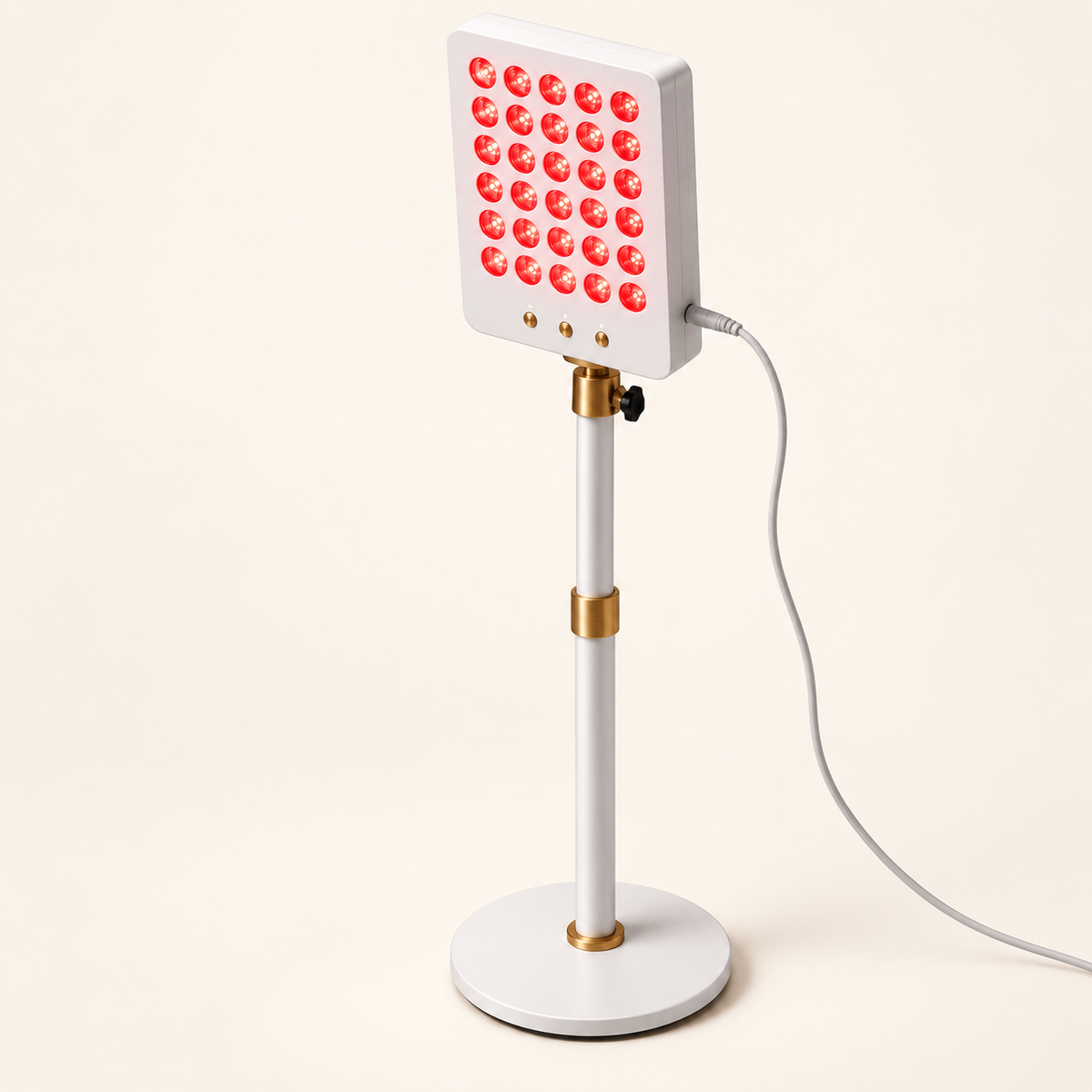
Our featured product for this guide is the Kroma Glow Pro red and near-infrared light therapy panel. It is a compact panel with a metal base, an extendable stand and a rotating bracket. Those positioning features make it a useful starting point for shoppers who are comparing a smaller panel format with wearable or flexible alternatives.
The Glow Pro's product page describes a desktop companion for an at-home routine. Its appeal in this comparison is the physical format: a panel that can be positioned on its stand rather than worn on the face. If you prefer a dedicated setup and want to understand how a compact panel might fit your space, this is the Kroma product to explore first.
Before buying, check the current product information and supplied-use guidance rather than inferring dimensions, output or treatment coverage from the photograph. Measure the place where you intend to use it and consider both the device and the position you would occupy during a session. Leaving enough room for comfortable, instructed use is more useful than simply finding a shelf where it will fit.
We have chosen the Glow Pro as this article's hero because it provides a clear example of the compact panel category, not because one product can be the best choice for every shopper. If a wearable facial format would suit you better, a mask deserves a closer look. If you want to investigate a larger panel, compare the Radiance Pro before making your decision.
Explore the Kroma Glow Pro and review its current product details.
When should you compare a larger panel?
A larger panel is worth investigating when the compact format does not match your intended setup. The key question is not simply whether bigger sounds better. It is whether the larger device's dimensions, positioning requirements and intended use suit the space you actually have. A dedicated wellness area can accommodate a different purchase from a shared bedroom or small home office.
The Kroma Radiance Pro full-body red light therapy panel is the larger-panel option to compare within this guide. Its product description lists a weighted base, an adjustable height rod and a flexible gooseneck. Review those features alongside the current product specifications to decide whether its physical setup makes sense for your home.
Be careful with the phrase full body. It is a product category description, not a reason to assume every area receives the same exposure in every position. Follow the device's instructions for positioning and permitted use. If your decision depends on a specific coverage area or measurement, get that detail clarified before ordering rather than filling the gap with an assumption.
Red light therapy face masks: a face-focused choice
A face mask is a different buying proposition from a standing panel. It may interest you if your priority is a device designed around a facial routine rather than a positionable light source. Fit, comfort, cleaning requirements and the instructions for use should be central to your comparison. A mask is not automatically preferable just because skincare is your starting point.
The Kroma Glow Mask red and near-infrared light therapy face mask is described on its product page as a face-and-neck format for at-home skincare routines. Explore that page if you want to compare a face-focused option with the Glow Pro's panel setup. Keep the comparison centred on how each product is intended to be used.
When looking at a mask, check how it should sit, what the instructions say about eye protection, and whether the routine fits your current skincare habits. Do not assume that every serum, exfoliant or active ingredient should be used immediately before a light session. Where compatibility is unclear, ask for appropriate advice and follow the product guidance rather than combining steps by trial and error.
Red light therapy mats: a flexible alternative
A flexible mat offers another format to investigate. Unlike a standing panel, its practical appeal is its flexible construction and the range of positions described by the manufacturer. That does not mean every position or type of contact is suitable. Look closely at permitted placement, cleaning, storage and operating conditions before deciding whether a mat is the right fit.
The Kroma Revive red light therapy mat is the flexible option in this comparison. Its product page describes a mat format that can be positioned in different ways. Check the current variant information carefully, because the catalogue includes full-body and half-body options, and the format you choose should match your available space and intended use.
Do not buy a mat on the assumption that you can sleep on it, cover it with bedding or leave it operating unattended. Those uses need explicit support in the instructions. A product's flexible appearance does not establish how it handles pressure, ventilation or extended operation. Treat its manual as essential reading, not an optional extra after the purchase.
Compare the information that actually helps you decide
Once you have a preferred format, make a practical comparison between the products on your shortlist. Start with dimensions, intended area of use, adjustment options, power requirements, cleaning guidance and what is included. These details tell you whether the device can fit into your home. They also expose questions that a lifestyle photograph cannot answer.
Technical specifications can be useful when they are clearly explained and measured under stated conditions. However, LED count, marketing labels and wavelength names should not become shortcuts for ranking products. A higher number on one line of a specification does not, by itself, prove that one device will deliver better results for your intended routine.
If a specification matters to your decision but is unclear, ask before purchasing. The same applies to session guidance, included accessories and any protection requirements. It is better to choose a device you understand than to order one based on an impressive phrase and discover later that the setup is not what you expected.
Budget for the whole purchase, not just the headline price
Price is an important part of choosing a red light therapy device, but value is personal. A product that suits your available space and preferred format may be a more sensible purchase than a larger option you will struggle to accommodate. Equally, buying the smallest device solely because it costs less can disappoint if its intended setup does not match what you wanted.
Review the current product price, delivery information, included items and applicable returns terms before checking out. Prices and offers can change, so this guide deliberately directs you to the product pages instead of quoting an amount that might become outdated. If you are comparing several options, use the same checklist for each rather than treating a discounted price as the deciding factor.
It can also help to think about storage and care. Do you have a suitable place to keep the device when it is not in use? Can you clean it as instructed? Is there a safe, practical route for its cable? These are small questions, but together they reveal whether the purchase is workable in daily life.
Build an at-home routine around the manual
After choosing a device, read its instructions before your first session. Follow the recommended positioning, session duration, frequency and eye-protection guidance for that specific model. There is no single schedule in this buying guide because importing a generic routine into every panel, mask and mat would ignore the differences between products.
Choose a time when you can use the device attentively and without rushing the setup. You might prefer a quiet part of your morning or evening, but convenience should work around the instructions rather than replace them. Do not operate the product while distracted by an activity that makes it difficult to notice discomfort or follow its use requirements.
A simple record can help you keep track of use and comfort. Note when you used the device, whether you followed the instructions and anything you want to ask about. Avoid treating daily changes in photographs or how you feel as proof of a device's effect. Many factors vary from day to day, and a personal log is not a clinical assessment.
Common buying mistakes to avoid
The first mistake is shopping for a promise rather than a format. Be wary of language that guarantees a transformation, a cure or a fixed result by a particular date. Your purchase should be based on clear information about the product, realistic expectations and an understanding of its intended use, not pressure to believe the most dramatic claim.
The second mistake is assuming that all red light devices use the same routine. The third is ignoring the physical setup until the parcel arrives. A few minutes spent measuring your space, reviewing the manual and checking the product details can prevent both problems. If you cannot picture a comfortable, instructed session in your home, pause before buying.
Another mistake is choosing several devices at once before understanding the first one. Starting with the format that most closely matches your priority can keep the decision manageable. You do not need a panel, a mask and a mat simply because all three exist. Compare them to find your preferred starting point, rather than building a collection for its own sake.
Questions to consider before using a device
Review the warnings and suitability information supplied with the product. If you have a medical condition, an eye condition, unusual sensitivity to light or questions about medication, seek advice from a qualified healthcare professional before use. Do the same if you are unsure whether a light-based device is appropriate for your personal circumstances.
If you experience discomfort or an unexpected reaction, stop using the device and seek suitable advice. Do not increase exposure to try to overcome a problem. Red light therapy products should not be used to delay investigation of a symptom or replace a treatment plan recommended by a clinician. A wellness routine and medical care are different decisions.
Frequently asked questions about choosing a device
Which red light therapy device is best for beginners?
Start with the format that fits your intended use, available space and willingness to set it up. A compact panel such as the Glow Pro is worth exploring if you prefer a positionable device. A mask may be more relevant if you want to compare face-focused formats. Beginner-friendly should mean understandable and appropriate, not simply small or inexpensive.
Should I choose a panel or a face mask?
Compare how you want to use the product. A panel sits separately and needs appropriate positioning; a face mask is designed around a facial format. Check each product's instructions, fit or adjustment options, and intended area of use. Neither format is automatically superior, and the right choice should come from your practical requirements rather than a universal ranking.
Does a larger panel automatically mean better results?
No conclusion about results should be drawn from size alone. A larger panel may suit a different setup, but dimensions do not establish what a particular user will experience. Review the product information and operating guidance. Choose a size that makes sense for your home and intended use, without treating bigger as a substitute for clear specifications.
How long should a session last?
Use the guidance supplied with your specific device. Session length can depend on the model and its intended operation, so this guide does not prescribe a universal number of minutes. Do not copy a duration from another product, a social-media routine or a different brand simply because the devices look similar.
Can I use more than one device in my routine?
Do not assume that combining devices is appropriate or that it creates better results. Check the instructions and seek suitable advice where needed. For a first purchase, identifying one clear priority is usually a more manageable way to compare the range than planning a multi-device routine before understanding the requirements of each product.
Where can I check current product details?
Use the linked Kroma product pages to review current descriptions and options, then clarify any missing information before ordering. This article is a buying guide, not a replacement for the product manual. Details such as included accessories, specifications and operating instructions should be confirmed for the model and variant you actually choose.
Find the Kroma format that fits your home
The clearest way to choose a red light therapy device is to work from your routine outwards. Decide what you want to focus on, select a suitable format, measure your space and check the instructions. Only then compare the finer product details. This approach keeps the purchase grounded in something useful: a device you understand and can accommodate properly.
If you want to begin with a compact, positionable panel, explore the Kroma Glow Pro. If a larger standing format is your priority, compare the Kroma Radiance Pro. For a face-focused option, review the Kroma Glow Mask, or investigate the Kroma Revive mat if a flexible format interests you.
Your best starting point is not the device with the loudest promise. It is the one whose format, product information and instructions match your needs. Take time to compare, ask about anything unclear and choose a setup that feels practical for your home.
This article provides general product-selection information, not medical advice. Follow the instructions and warnings supplied with your device and seek professional guidance when personal suitability is uncertain.

Leave a comment
This site is protected by hCaptcha and the hCaptcha Privacy Policy and Terms of Service apply.